
Graphic design is one of the most exciting and rewarding careers in today’s digital world. Every company, from startups and small businesses to global brands, needs professional designers to create logos, websites, advertisements, social media posts, product packaging, and marketing materials.
The demand for skilled graphic designers continues to grow as businesses invest more in digital marketing, branding, and online communication. The best part? You don’t need an expensive university degree to begin your journey. With dedication, creativity, and the right learning path, anyone can become a successful graphic designer.
Whether you’re a student exploring career options, a working professional planning a career change, or someone who simply loves creativity, this guide will walk you through the complete process of becoming a graphic designer.
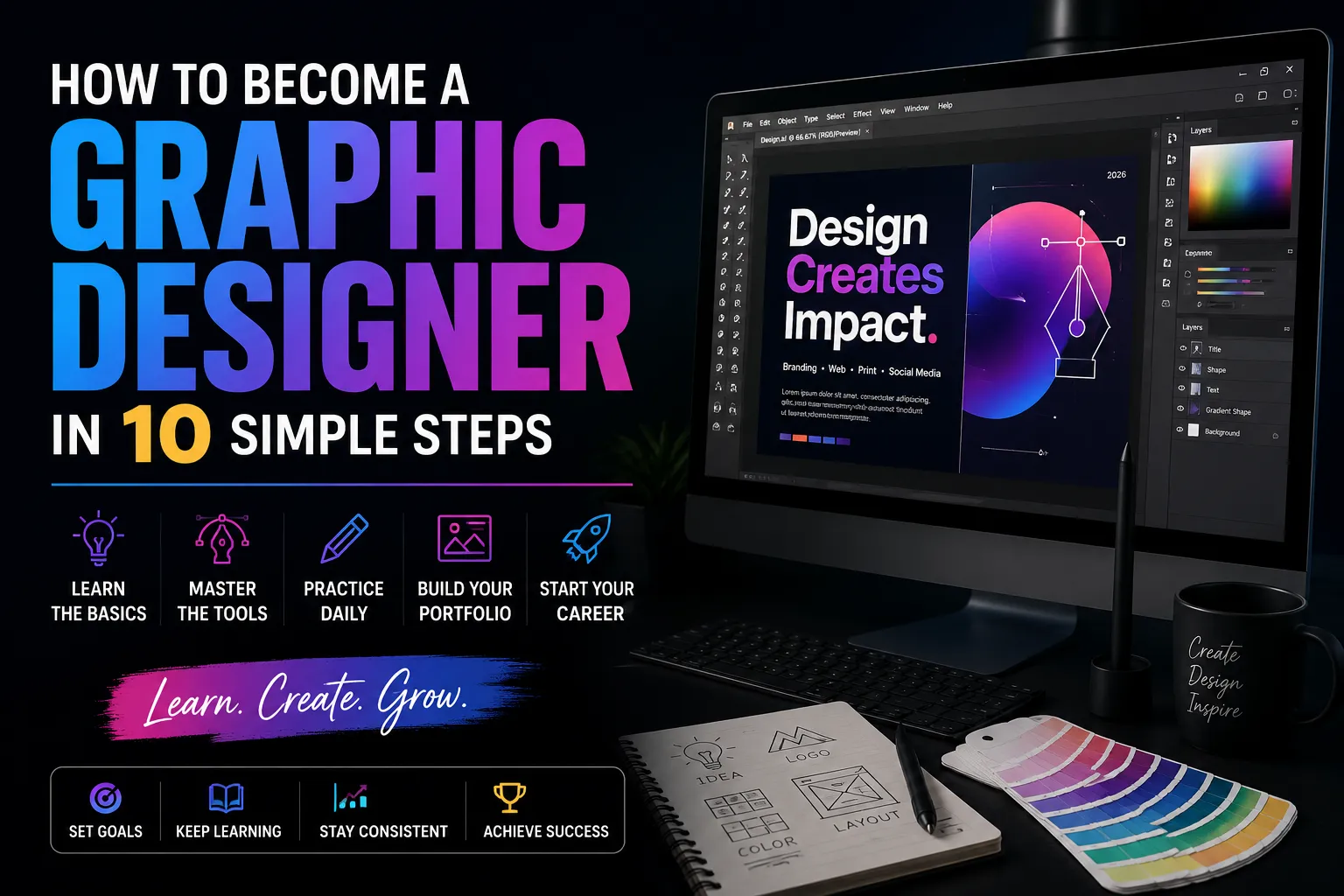
By following these 10 simple steps, you’ll understand what skills to learn, which software to master, how to build a portfolio, and how to start earning as a professional designer.
“Creativity is intelligence having fun.” – Albert Einstein
Why Choose Graphic Design as a Career?
Graphic design is more than creating attractive visuals. It is the art of communicating ideas through typography, color, images, layouts, and creativity. Every successful brand relies on visual communication to connect with its audience.
Here are some reasons why graphic design is an excellent career choice:
High Demand
Businesses of every size require graphic designers for branding, marketing, websites, mobile applications, social media, and advertising campaigns.
Multiple Career Opportunities
Graphic designers can work in:
- Marketing agencies
- Advertising companies
- Software houses
- Printing companies
- Publishing firms
- Media organizations
- E-commerce businesses
- Startups
- Government organizations
- Educational institutions
Many designers also build successful freelance careers by working with clients from around the world.
Flexible Working Environment
Graphic designers often have the flexibility to:
Start their own creative business
- Work remotely
- Work from home
- Join a design agency
- Become a freelancer
- Start their own creative business
This flexibility makes graphic design one of the most attractive digital careers today.
Unlimited Creativity
Unlike many traditional jobs, graphic design allows you to solve problems creatively. Every project presents a new challenge, whether you’re designing a logo, website, brochure, or social media campaign.
Excellent Income Potential
As your skills and experience grow, so does your earning potential. Designers who specialize in branding, UI/UX, motion graphics, or 3D design often command higher rates than generalists.
Step 1: Understand What Graphic Design Really Is
Before learning any software, it’s important to understand what graphic design actually involves.
Many beginners think graphic design is simply “making beautiful images.” In reality, professional graphic design is about solving communication problems visually.
A designer creates visuals that help businesses:
- Build brand identity
- Communicate messages clearly
- Attract customers
- Increase sales
- Improve user experience
- Strengthen marketing campaigns
Every design should have a purpose.
For example:
- A logo helps customers recognize a brand.
- A website guides visitors toward important information or actions.
- A social media post encourages engagement.
- A brochure explains products or services.
- Packaging influences purchasing decisions.
Understanding the purpose behind every design is the foundation of becoming a successful graphic designer.
Common Types of Graphic Design
There are many specializations within graphic design, including:
- Logo Design
- Brand Identity Design
- Social Media Design
- Print Design
- Packaging Design
- Advertising Design
- Website Design
- UI Design
- UX Design
- Motion Graphics
- Illustration
- Presentation Design
- Infographic Design
As a beginner, it’s beneficial to explore different areas before deciding which specialization interests you most.
Step 2: Learn the Basic Principles of Design
Many beginners jump directly into Photoshop or Illustrator without learning design fundamentals. This often leads to visually attractive designs that fail to communicate effectively.
Professional designers first master the principles of design.
These include:
Color Theory
Colors influence emotions and shape customer perception.
For example:
- Blue represents trust and professionalism.
- Green symbolizes growth and nature.
- Red conveys energy and urgency.
- Black suggests luxury and sophistication.
- Yellow communicates optimism and creativity.
Learning how to combine colors effectively is one of the most valuable skills for any designer.
Typography
Typography is the art of arranging text in a way that is readable and visually appealing.
A designer should understand:
- Font selection
- Font pairing
- Text hierarchy
- Readability
- Line spacing
- Letter spacing
- Alignment
Strong typography can dramatically improve the quality of any design.
Layout and Composition
Good layouts guide the viewer’s eyes naturally through the design.
Important concepts include:
- Grid systems
- Visual hierarchy
- Alignment
- Balance
- White space
- Proximity
- Contrast
These principles help organize information clearly and professionally.
Visual Hierarchy
Not every element should receive equal attention.
The most important message should stand out first, followed by supporting information.
Professional designers achieve this using:
- Size
- Color
- Contrast
- Placement
- Spacing
- Typography
Branding Fundamentals
Designers should understand how visual elements work together to create a consistent brand identity.
This includes:
- Logos
- Color palettes
- Typography
- Icons
- Photography style
- Brand voice
- Design consistency
Businesses rely on consistent branding to build trust and recognition.
Step 3: Learn Industry-Standard Graphic Design Software
Professional designers use specialized software to create their work.
While many tools are available, beginners don’t need to learn everything at once.
Focus on mastering a few essential applications first.
Adobe Photoshop
Best for:
- Photo editing
- Social media graphics
- Digital advertisements
- Image manipulation
- Website mockups
Photoshop is one of the most widely used tools in the creative industry.
Adobe Illustrator
Best for:
- Logo design
- Vector graphics
- Icons
- Branding
- Illustrations
- Business cards
Because Illustrator uses vector graphics, designs remain sharp at any size.
Adobe InDesign
Best for:
- Books
- Magazines
- Brochures
- Catalogs
- Annual reports
- Multi-page documents
Publishers and print designers rely heavily on InDesign.
Canva
Although not a replacement for professional Adobe software, Canva is an excellent beginner-friendly tool for creating:
- Social media posts
- Presentations
- Flyers
- Invitations
- Marketing materials
Learning Canva can also help beginners understand layout and design principles before moving to advanced software.
Figma
Figma has become one of the most popular tools for:
- UI Design
- UX Design
- Website Design
- Mobile App Design
- Team collaboration
Many companies now expect designers to have at least basic Figma knowledge.
Step 4: Practice Every Day
Graphic design is a practical skill. Reading books and watching tutorials are helpful, but improvement comes through consistent practice.
Try to design something every day, even if it’s a small project.
Practice ideas include:
- Social media posters
- Business cards
- Restaurant menus
- Logos
- Event flyers
- Product advertisements
- Instagram carousels
- Website banners
- YouTube thumbnails
- Mobile app screens
Each project helps strengthen your creativity, technical skills, and confidence.
Don’t compare your work to experienced designers. Instead, compare today’s design with what you created last month. Continuous improvement is what matters most.
Step 5: Study Great Designers and Real Brands
One of the fastest ways to improve is by analyzing professional work.
Observe how successful brands communicate visually.
Pay attention to:
- Logo simplicity
- Color choices
- Typography
- Layout
- Photography
- White space
- Brand consistency
- User experience
Rather than copying designs, ask yourself:
- Why did the designer choose these colors?
- Why is this layout effective?
- How does the design guide the viewer’s attention?
- What emotions does it create?
- How could I solve the same problem differently?
This habit develops your design thinking and helps you create original, purposeful work instead of simply imitating trends.
Step 6: Build a Professional Portfolio
Your portfolio is the most important tool in your graphic design career. Clients and employers care more about what you can create than where you studied.
A strong portfolio demonstrates your creativity, technical skills, and ability to solve design problems.
What Should You Include?
Your portfolio should showcase a variety of projects, such as:
- Logo designs
- Brand identity projects
- Social media campaigns
- Website UI designs
- Mobile app interfaces
- Flyers and brochures
- Business cards
- Packaging designs
- Product advertisements
- Presentation designs
Quality matters more than quantity. A portfolio with 10 outstanding projects is often more impressive than one with 50 average designs.
Step 7: Learn How to Work with Clients
Technical skills alone won’t make you successful.
Professional designers also know how to communicate effectively with clients.
Understand the Client’s Needs
Before beginning any project, ask questions such as:
- What is your business?
- Who is your target audience?
- What message should the design communicate?
- Are there existing brand guidelines?
- What is the deadline?
- What style do you prefer?
Understanding these details reduces revisions and improves client satisfaction.
Accept Feedback Professionally
Clients may request changes.
Instead of taking criticism personally:
- Listen carefully.
- Ask clarifying questions.
- Explain your design decisions respectfully.
- Be open to revisions.
- Focus on solving the client’s problem.
Professional communication often leads to repeat business.
Meet Deadlines
Reliability is just as important as creativity.
Deliver projects on time, communicate progress regularly, and keep clients informed if unexpected delays occur.
Step 8: Gain Real-World Experience
The fastest way to improve is by working on real projects.
Experience teaches lessons that tutorials cannot.
Ways to Gain Experience
- Design for local businesses.
- Volunteer for nonprofit organizations.
- Create projects for friends or family.
- Offer affordable services to startups.
- Complete freelance projects.
- Participate in online design competitions.
- Redesign famous brand identities for practice.
Every project strengthens your confidence and expands your portfolio.
Internships
Working as a design intern allows you to:
- Learn professional workflows
- Collaborate with experienced designers
- Understand client expectations
- Improve communication skills
- Build industry connections
Even short internships can significantly enhance your career prospects.
Step 9: Build Your Personal Brand
If people don’t know your work exists, they can’t hire you.
Personal branding helps establish credibility and attract opportunities.
Create a Professional Online Presence
Build:
- A personal website
- LinkedIn profile
- Behance portfolio
- Dribbble profile
- Professional email address
Maintain consistent branding across all platforms.
Share Your Work
Regularly post:
- Completed projects
- Design tips
- Before-and-after redesigns
- Branding concepts
- Behind-the-scenes content
- Creative process videos
Consistency helps build trust and demonstrates your expertise.
Network with Other Designers
Join design communities, participate in discussions, attend webinars, and connect with professionals on LinkedIn.
Networking often leads to job opportunities, collaborations, referrals, and mentorship.
Step 10: Apply for Jobs or Start Freelancing
Once you’ve developed your skills and portfolio, you’re ready to begin your career.
There are multiple paths you can take.
Full-Time Employment
Many designers work as:
- Junior Graphic Designer
- Marketing Designer
- Brand Designer
- UI Designer
- Visual Designer
- Production Designer
Working in a company provides valuable experience and mentorship.
Freelancing
Freelancing allows you to work with clients from around the world while choosing your own schedule.
To succeed as a freelancer:
- Build a professional portfolio.
- Define your services clearly.
- Create competitive pricing.
- Deliver projects on time.
- Collect client testimonials.
- Build long-term relationships.
Satisfied clients often return with additional work and referrals.
Starting Your Own Design Agency
After gaining experience, many designers launch their own agencies, offering services such as:
- Branding
- Logo design
- Website design
- Social media management
- Marketing materials
- UI/UX design
- Creative consulting
Entrepreneurship provides unlimited growth opportunities for experienced designers.
Common Mistakes Beginners Should Avoid
Many new designers slow their progress by making avoidable mistakes.
Avoid these common pitfalls:
- Copying other designers instead of developing your own style.
- Ignoring design fundamentals.
- Learning software without understanding design principles.
- Using too many fonts in one project.
- Overusing visual effects and filters.
- Not organizing project files.
- Skipping feedback and revisions.
- Building a weak portfolio.
- Giving up too early.
- Stopping learning after getting your first job.
Every mistake is an opportunity to improve.
Our Perspective
Graphic design is one of the most accessible and rewarding creative careers available today. Success doesn’t depend on natural talent alone—it comes from consistent practice, curiosity, and a willingness to improve.
Remember these ten steps:
- Understand graphic design.
- Learn design principles.
- Master professional software.
- Practice every day.
- Study great designers.
- Build a strong portfolio.
- Learn client communication.
- Gain practical experience.
- Build your personal brand.
- Start applying for jobs or freelance work.
Every experienced designer started as a beginner. The difference is that they kept learning, creating, and improving one project at a time.
If you stay committed, seek feedback, and continue developing your skills, you can build a successful career in graphic design and create work that makes a meaningful impact for businesses and audiences around the world.